


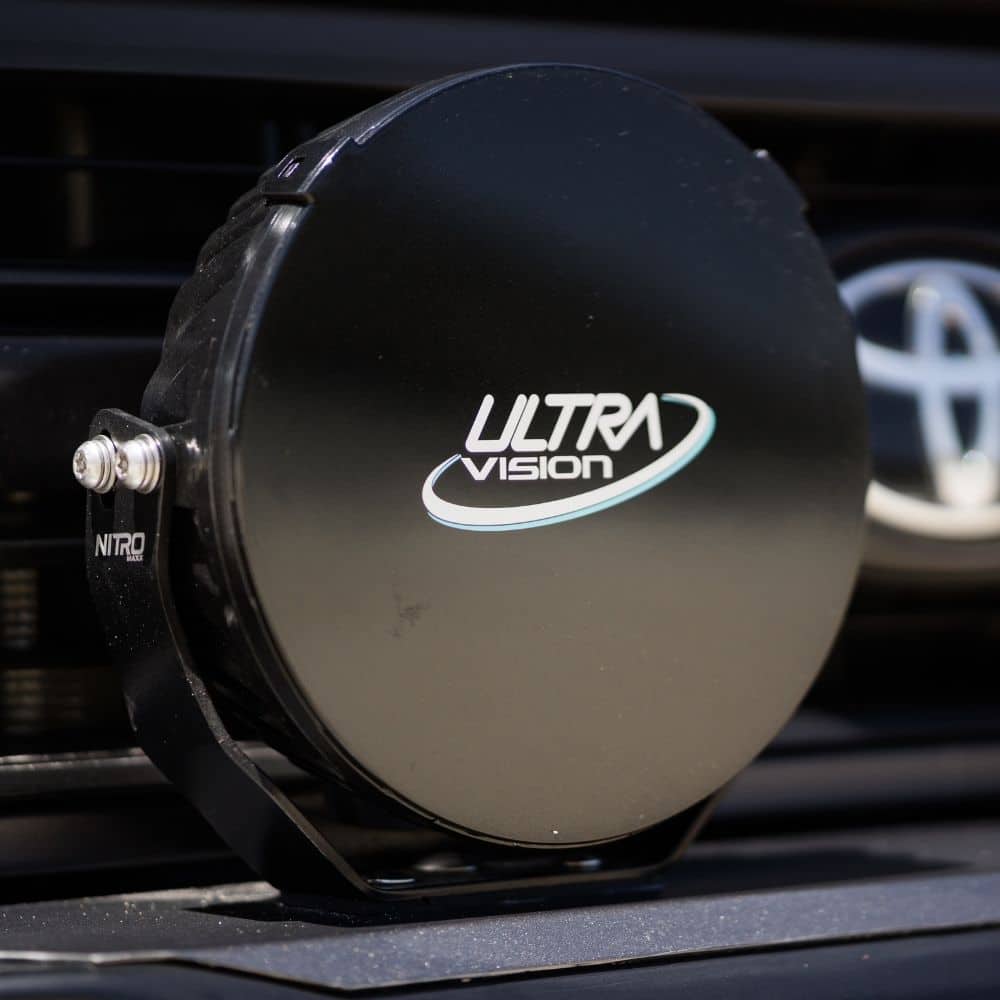


If you’ve been scouring the market for a new set of driving lights or a light bar, you’ve likely noticed a shift in the specs. A few years back, everyone was chasing the “10W chip” as the gold standard. Today, the conversation has changed.
Why did the industry move away from high-wattage chips, and does a lower wattage mean you’re getting a “weaker” light? Let’s break down the evolution of LED technology and why 5W chips are currently winning the race.
The Rise and Fall of the 10W LED
About five years ago, most of the premium LED driving lights on the market seemed to use 10W LEDs. At the time, the general rule of thumb was that they offered maximum light output for the smallest surface area.
Back then, the market was flooded with “economical” imported 90W light bars (typically about a metre long) that looked quite impressive on the bull bar until you actually turned them on! In contrast, the 10W chips were the “powerhouses” of the era. However, as the tech matured, some serious “under the bonnet” issues began to surface.
The Heat Problem: Why 10W Chips Struggle
The biggest enemy of any LED is heat. As time went on, it became evident that controlling the temperature of a 10W LED was quite difficult, particularly if they were running “at full tilt.”
- Static Failure: If these lights were used in a static situation, such as a work light or on an idling car with no airflow, the LEDs could fail prematurely due to overheating.
- The Throttling Solution: To overcome this, most manufacturers started to “throttle back” the power, running a 10W chip at only 6W or 7W.
- The Compromise: While this helped with heat build-up, it reduced the main advantage of the size-to-output ratio. Essentially, you were paying for a 10W chip but only getting 6W of performance.
This is the primary reason why there is such a massive gap between Raw Lumens and Effective Lumens. If a chip is throttled to save it from melting, those “Raw” numbers on the box don’t mean much on the road.
The Move to 5W Optics
It wasn’t just about heat; it was about where the light was actually going. As manufacturers got smarter with intelligent optics and reflectors, they realised they could get better control from more, smaller wattage LEDs than from a few large ones.
Why 5W LEDs Often Outperform 10W:
- Better Beam Control: Smaller chips allow for more intricate reflector designs, helping to control the distance and width of the beam more accurately.
- Distance Records: This shift led to massive leaps in performance. By 2017, Ultra Vision achieved 1 lux at 1.2km—along with a width of 100°—from only two 140W lamps.
- Thermal Management: Because 5W chips spread the heat load across a larger surface area of the PC board, they are much easier to keep cool without aggressive power throttling.
The Current State of Play
Around 2015, the tide started turning. Global LED leaders like Cree, LG, and Luxeon began focusing their R&D on 5W chips. They successfully increased light output and efficiency while offering many more options in CRI (Colour Rendering Index) and colour temperature.
By contrast, development with the 10W chips seemed to slow or stop altogether. As the production volume of 5W chips increased, so did the performance gap. Today, most high-end manufacturers have moved completely away from the 10W legacy chips in favour of the more reliable, efficient, and “intelligent” 5W alternatives.
What Should You Look For?
When you’re choosing your next set of lights, don’t get hung up on the wattage of the individual chips. A light bar using fifty 5W chips will almost always provide a more consistent, reliable, and better-aimed beam than a bar using twenty-five 10W chips.
Key Takeaways:
- Reliability: 5W chips run cooler and last longer in Australian conditions.
- Efficiency: Modern 5W chips often produce more “Effective Lumens” per watt than older 10W tech.
- Optics: More chips mean more reflectors, which means better control over light scatter.
Ready to see the difference for yourself? Check out our range of Driving Lights and Light Bars.
