





While you might have heard of some old-school takes like “an AWD is just a watered-down 4WD” or ” 4WD is only for hardcore off-roaders“, comparing the pair is more about what they do well and the conditions they excel in.
Read our complete guide of AWD vs 4WD to discover the key differences between AWD and 4WD, the pros and cons of each and which one to select for your driving habits.
What’s the main difference?
The main difference between AWD and 4WD is that AWD automatically distributes power to all wheels full-time, while 4WD is a part-time system that requires manual activation for off-road or low-traction conditions.
What is AWD?
While there can be minimal differences in the mechanical construction of AWDs and 4WDs, their primary point of difference is how they engage their tyres and operate. AWD describes vehicles that have a four-wheel driving system that can engage to maximise road traction.
Some automakers often use AWD as a safety feature, as the AWD system will engage when the car detects slippery surfaces or a lack of traction. There are two main types of AWD vehicles: full-time AWD, where the system is always engaged and part-time AWD, where the system only comes into play when extra traction and improved road performance are required.
AWD is best for most drivers who need a little traction but aren’t going to be doing much off-roading. One benefit of AWD is that you don’t need to activate the system yourself when you are driving in rain or snow, or driving the car a little off-road.
What is 4WD?
4WD vehicles have the same 4-wheel capability as AWDs yet generally require manual driver input to engage or, feature full-time 4WD systems, which remain on at all times.
In addition to part-time vs full-time, 4WDs also have low-range or high-range options. The low range makes it easier for the engine to power the vehicle at a lower speed over steep or tricky terrain and deep mud by adding extra torque.
High-range locks the front and rear wheel trains together, which is better for slippery roads, gravel, snow and moderate off-roading.
4WDs are designed for off-roading, so they are ideal for anyone who plans to take on challenging conditions and needs maximum traction in the mud, sand and rocky trails that 4WDs are made for.
AWD vs 4WD: Key differences
| Feature | AWD (All-Wheel Drive) | 4WD (Four-Wheel Drive) |
|---|---|---|
| Traction Control | Automatic power distribution | Manually engaged for max traction |
| Best Terrain | Rain, snow, gravel, mild off-road | Mud, sand, steep inclines, and extreme terrain |
| Low-Range Mode | No | Yes |
| Driver Input | Fully automatic | Requires manual engagement |
| Fuel Efficiency | More fuel-efficient | Less efficient due to extra drivetrain weight |
| Ideal For | City driving, snow, mild off-road | Hardcore off-roading, towing, overlanding |
This video explains it all very well:
Pros & Cons of AWD
Pros:
- Works automatically, no driver input required
- Improves traction in poor weather conditions
- More fuel-efficient than 4WD systems
- Available in sedans, SUVs and crossovers
Cons:
- Not built for extreme off-roading
- No low-range gearing for rough terrain
- Less customisable compared to 4WD
Pros & Cons of 4WD
Pros:
- Unmatched off-road capability for rugged terrain
- Low-range gearing for steep inclines and obstacles
Cons:
- Heavier and less fuel-efficient
- Requires manual engagement and driver skill
- More expensive and higher maintenance costs
When to choose AWD vs 4WD
With all the information above, now is the time to decide which vehicle is right for you and your road habits. An AWD vehicle is a great choice for everyday drivers who might want a little bit of extra grip in tough conditions. In Australia, unless you are a regular off-roader, then an AWD is probably the right choice for you.

By Vauxford – Own work, CC BY-SA 4.0
AWD vehicles are perfect for the added convenience and safety of extra traction in all weather conditions. The best models to look out for with great AWD capabilities include Subaru Forester, Toyota RAV4 AWD, Audi Quattro models.
4WDs are a great option for drivers who plan to take frequent off-road adventures, especially if you encounter deep mud, sand, rocky terrains and extreme off-road trails.
A 4WD is also the best choice if you plan on towing heavy loads on uneven surfaces. If you are an off-road enthusiast with plans to customise your vehicle, then a 4WD might be the option for you. Some of the most powerful 4WDs on the market are the Jeep Wrangler Rubicon, Toyota Land Cruiser, and Ford Ranger Raptor.
AWD vs 4WD for different driving conditions
Depending on the driving conditions you are likely to encounter, the choice between AWD and 4WD will affect how you drive and the type of conditions your vehicle is suited for.
For example, we’ve seen firsthand how 4WD vehicles handle the steep, rutted tracks of the Victorian High Country or the soft sands of Fraser Island. In these environments, low-range gearing and diff locks make all the difference!
Is 4WD or AWD better for driving in snow?
For snow and icy conditions, an AWD will provide better stability through its mechanics, while a 4WD is better built to take on deep snow areas and steep inclines.

Is 4WD or AWD better for off-roading?
For off-roading, a 4WD is the best choice. The ability to lock both wheel trains together and improve traction or engage low-range driving makes it the only real option for those planning to go off-road.
Is 4WD or AWD better for driving in sand?
If you plan on beach driving, then a 4WD is for you, because as with other tricky surfaces, the low-range option will help your vehicle’s performance on soft sand.
Is 4WD or AWD better for towing?
If you plan on towing, a 4WD is best, especially if you plan on taking tow loads off-road like caravans and trailers.
Cost & maintenance considerations
When purchasing a vehicle, you should also consider the price, not just of the initial purchase, but also throughout the vehicle’s lifetime. When comparing the sticker price of AWD vs 4WD, AWDs are generally cheaper to purchase than full 4WD models.
Regarding fuel economy, an AWD is generally lighter than 4WD, making it more affordable to fill up and keep running. Another area you might notice is the difference in costs for AWD vs 4WD through maintenance. Because 4WD includes more complex drivetrain components, servicing requirements and maintenance will be more expensive than a simpler AWD.
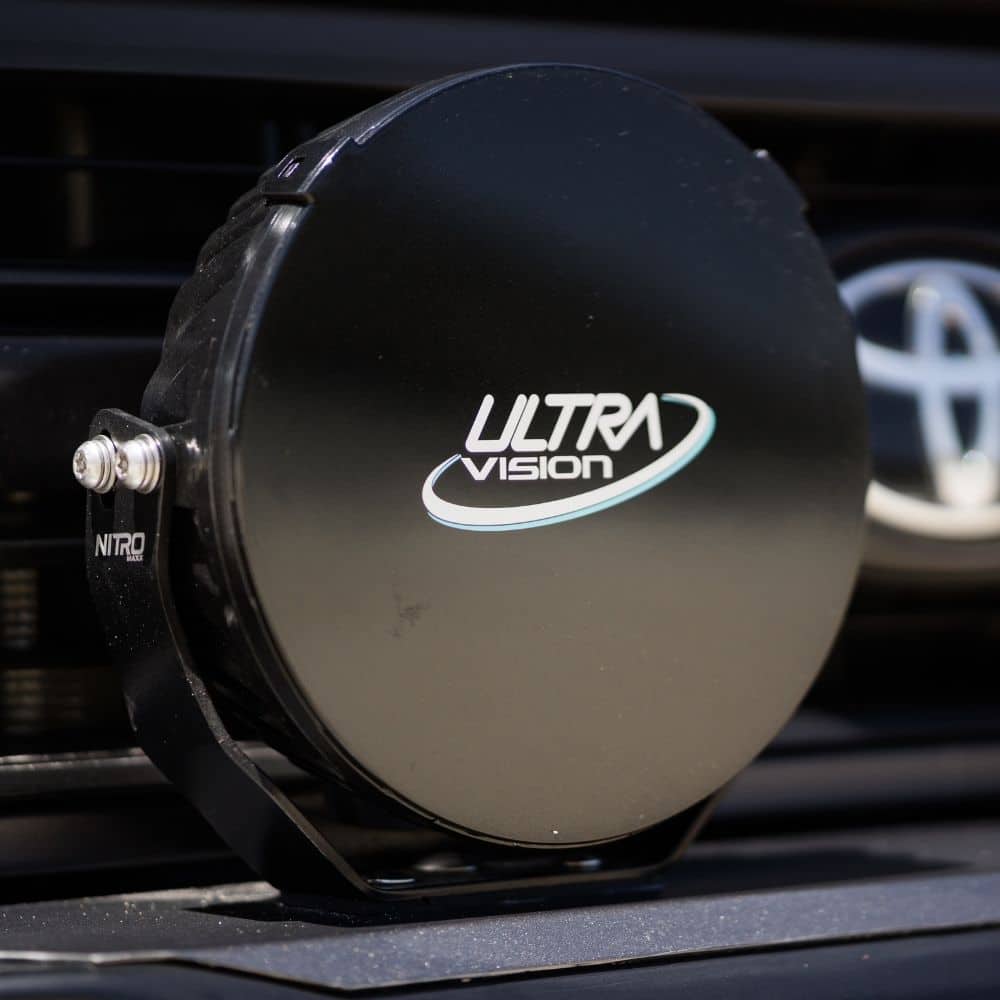
Additionally, 4WD owners often invest in specialised accessories like high-performance spotlights to enhance visibility in remote or off-road conditions – another consideration in the total cost of ownership
Which one should you choose?
By now, you’ve read the pros and cons, weighed up the differences, and gotten closer to deciding what’s best for your next vehicle. As an everyday driver who wants superior handling and traction on roads where you might experience all weather conditions, an AWD is probably the best choice for you.
If you plan on taking on off-road adventures in extreme and tricky terrains, then a 4WD will enable you to get there and back safely with exceptional traction and wheel train control.
