



Fog can be frustratingly common on Aussie roads. You’ll hit it along the Great Ocean Road when sea fog drifts in, in the Victorian High Country when the mist drops low, through the Tassie Midlands in winter, or in the Blue Mountains valleys where the clouds settle. Up north, the Atherton Tablelands cops it during the wet season too.
So, when visibility drops, you need to know which lights to run. Pick the wrong ones and you’ll blind yourself with glare. Get it right and you’ll be able to clearly see the road edges, lane markings, oncoming traffic and – most importantly – the roos on those outback tracks.
In thick fog, every metre of visibility counts; having the right setup can mean the difference between spotting a bend in time or finding yourself too close to a hazard before you know it.
And then there’s the legal bit: under Australian Road Rules (Rule 217) fog lights can only be used in fog or bad weather that kills visibility. When it clears, they must be switched off. The NSW Government and Transport Victoria state to use fog lights at the right times, or risk a fine.

What are fog lights?
Fog lights are mounted low on the bumper and throw a wide, flat beam that hugs the road. They’re built to punch under the fog instead of reflecting off it, straight back in your eyes. They won’t light up the highway in front of you like driving lights, but they’ll highlight the road edges and markings, and pick out close hazards when the weather turns.
Which lights can you use in fog?
When you find yourself in a situation with reduced visibility due to fog, which lights can you use? Legally, you can only use fog lights in actual fog or bad weather that knocks down visibility. Once it clears, switch them off. That’s straight from ARR 217 and backed by every state road authority.
Whereas if it’s getting dark, or it starts raining, which lights should you use? That’s when you stick to your headlights or driving lights, usually on low beam. High beam can work on clear, open country roads if there’s no traffic around, but it’s no good in fog or heavy rain because the light just bounces back at you. Fog lights alone don’t cut it for normal night or wet conditions; they’re an add-on for reduced-visibility weather, not a replacement for your main headlights.
1. Headlights in fog
If you’ve got no fog lights fitted, use the low beam. It gives you the best balance between visibility and glare control. Transport Victoria and the NRSPP both recommend this, and most state road safety authorities back it up. If you’re using daytime running lights only, make sure you flick your actual headlights on, as DRLs aren’t bright enough or aimed correctly for fog.
On busier roads like the Hume or Bruce Highway, slow right down and leave a bigger gap to the car in front. Don’t sit on someone’s tail hoping to use their lights, you’ll just reduce your own reaction time. Use reflective guideposts and road markings as reference points. Keep your windscreen, mirrors, and headlights clean so scatter and glare are reduced. And remember, if it’s thick enough that you can barely see the bonnet, it’s safer to pull over in a rest bay until conditions lift.
Fog lights vs Headlights
Here’s a simple rule: if you’ve got fog lights and you’re in fog, use them as per state guidance. Don’t have them? Low beam and steady driving is the go. NSW and Victoria both give the same advice below:
Headlights and taillights help you to see and be seen. You must use them:
- between sunset and sunrise.
- in hazardous conditions with reduced visibility.
Familiarise yourself with the headlight symbol on the dashboard to ensure it is on when required.
2. High beams in fog
High beam and fog don’t mix. All it does is dazzle you and can reduce your vision. So, the same road rules apply; you still need to dip high beams within 200 metres of another vehicle. Check your state’s guidance for the details, but the bottom line is don’t use your high beams in fog.
3. Driving lights (Spotlights) in fog
Spotlights are built for throwing light a long way down country roads. In fog, they can be a bit too powerful. That narrow, bright beam doesn’t penetrate the fog completely, and sometimes only lights up the fog, killing your visibility. On top of that, you risk distracting anyone else on the road. They’re great tools when you’re out bush at night, and for the open road when the air is clear, but in fog they’re not always the best to use. That’s why road authorities recommend leaving them off until conditions improve.
Fog lights vs Spotlights
Fog lights throw a wide, flat beam and are mounted low on the bumper to push light under the fog. Spotlights produce more focused, long-range beams, usually mounted higher up and tuned for distance. In fog, the power produced by spotlights can actually have the reverse effect and reduce your visibility. Use fog lights if you’ve got them, or drop to low beam and slow down if you don’t.
4. Light bar in fog
Do light bars help in fog?
This totally depends on where they’re mounted. A roof-mounted or high-mount light bar can make glare worse, as the beam will shine down through the fog. A light bar mounted low with a wide beam can help at low speeds off-road, but when you’re on the road, it’s probably safer to use your fog lamps.
On road vs off road
On highways, fog lights or low-beam lights won’t dazzle you or oncoming traffic. However, if you’re off-road and crawling in heavy fog, a low-mounted light bar with a widespread can add some extra side fill so you can see the edge of the trail and light up obstacles, not just bouncing glare back at your bonnet.
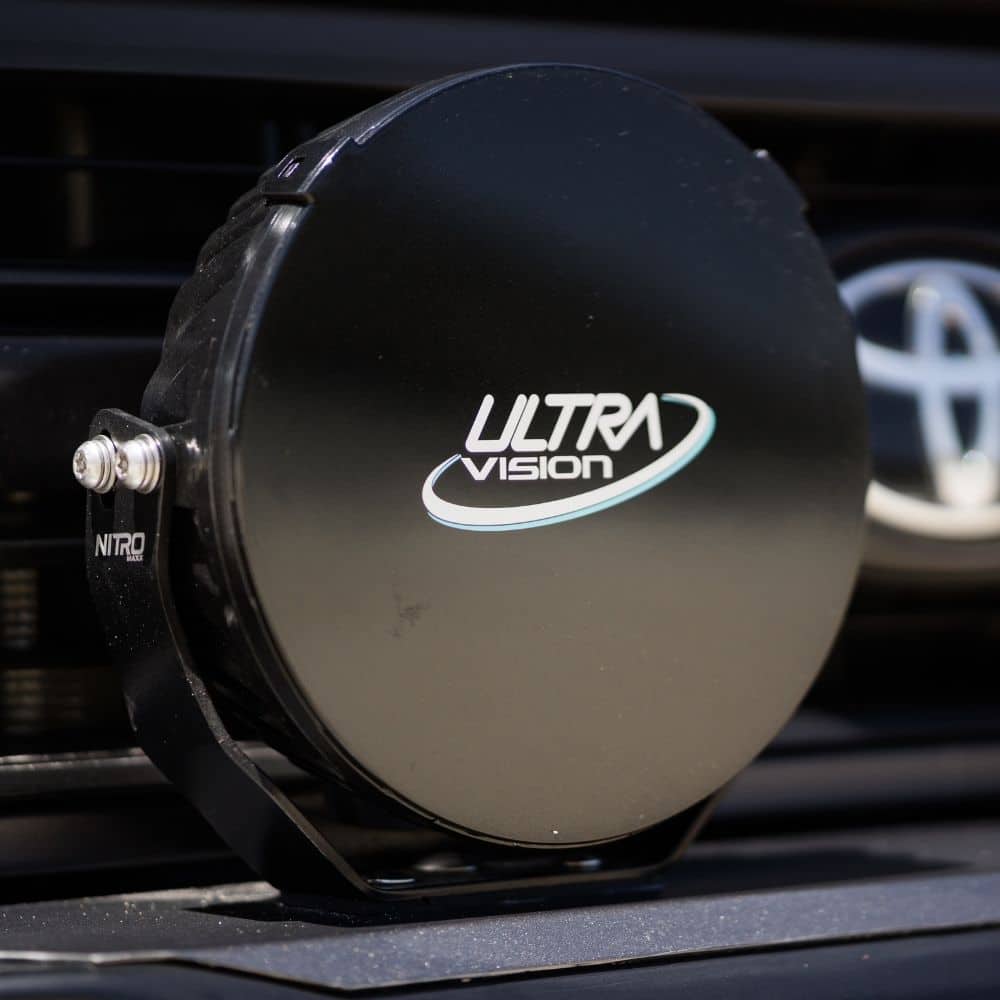
Check out some of our Nitro Maxx light bars introduced by Connor from Ultra Vision Lighting:
View this post on Instagram
Best lights for off-road in foggy conditions
Fog doesn’t just hit the highways. If you’re touring outback or off-track, you’ll run into it in the Victorian High Country, Kosciuszko NP, SA’s Coorong, WA’s karri forests, or even the Queensland Hinterland, so it’s good to be prepared for foggy conditions at certain times of year.
Here’s a good setup we would suggest for off-road foggy conditions:
- Primary lights: Low-mounted fogs with a wide, flat beam.
- Supplementary lights: Warmer coloured auxiliary lights, mounted low where possible, to help pick up detail on wet trails, signs, and foliage.
Off-road beam tips:
- Keep roof bars and long-range spots off in fog.
- Angle beams slightly down to avoid bonnet glare.
- Keep the lenses clean: mist, mud, and red dust knock light output right down.
“In alpine fog we test with low-mounted wide beams to keep light under the haze and on the edges where hazards appear first”, says our Ultra Vision Lighting engineer. “It’s all about beam control, light where you need it, not bouncing back at you. The aim is to push light low and wide so you can see the edges, ruts, and hazards without lighting up the fog itself.”
FAQs
What are amber fog lights?
Amber or yellow fog lights are lights that are designed for optimal visibility in fog, and often come with a yellow or amber lens cover or warmer light temperature. The best lights for fog are amber or yellow fog lights as they cut glare and make lane markings and reflectors easier to see. Handy on winding alpine roads or coastal stretches with heavy sea fog.
Are fog lights legal to use anytime?
No. Under ARR 217 and state law, you can only run fog lights in fog or serious weather that reduces visibility. Use them in the clear and you risk copping a fine for dazzling other drivers. It’s a safety thing, if everyone ran fogs all the time, the extra glare would make night driving tougher for everyone.
Can I use my light bar in fog on the highway?
While light bars are fantastic for giving you extra visibility in most conditions, on foggy roads, no matter how straight, use fog lights or low beam. Save the light bar for open country highways at night or off-road in clear conditions. Using a bar in fog can actually make you see less and put other drivers at risk.
Do yellow lenses or covers make a difference?
Yes. Amber or yellow covers cut scatter and improve contrast. They don’t turn a driving light into a fog light, but they’re a useful tweak if paired with the right beam pattern. They’re also a cheap way to adapt existing gear if you don’t want to invest in dedicated fog lamps straight away.
Bottom line: In Aussie fog, stick with low-mounted fog lights or low beam. Amber light helps to reduce glare and give you more visibility in tricky conditions, but make sure high beams and spotlights stay off.
Beam control is what matters most. Using a set of driving lights or a light bar in the right way at the right time will give you the most control on your adventures, no matter what the weather. Our Aussie-made options give you the gear to handle whatever the conditions throw at you.
Yellow vs white fog lights
Amber fog lights or warmer white lights scatter less and make road lines and markers stand out more. The colour cuts down on the brilliant white glare that standard headlights often produce. It also helps your eyes pick up contrast on wet bitumen, clay tracks, and roadside signs.
That’s why many drivers rate them for fog, whether they’re on the road or tackling alpine trails. In practice, amber fog lights don’t magically see further, but the warmth of the light means less glare, allowing you to see details more clearly.
We offer options around 4000-4500K, which hit that sweet spot, not too yellow, not too white, but giving you a solid middle ground that works in a mix of Aussie conditions, from coastal mist to mountain fog.
